
Most patients understand that a hair transplant is a surgical procedure. Fewer have a clear picture of the full hair transplant recovery timeline before they go in, and that gap is where most post-operative anxiety begins. The first is physical healing, which is complete within two to four weeks. The second is the hair growth cycle, which takes ten to twelve months.
Confusing the two is the single most common cause of unnecessary anxiety after a hair transplant. Patients who see hair shedding in the first month assume the procedure has failed. It has not. Shedding at that stage is a normal and expected part of the process.
This guide is for patients who have booked a procedure or are close to doing so. It explains what happens at each stage, what is normal, what requires attention, and what you can do to support a good outcome.
The Two Phases of Recovery
Understanding this distinction before your procedure will prevent most post-operative anxiety.
Phase 1: Physical healing
The donor and recipient sites heal within two to four weeks. Scabbing, swelling, and redness resolve during this period. This phase is what most people think of as recovery.
Phase 2: Hair growth cycle
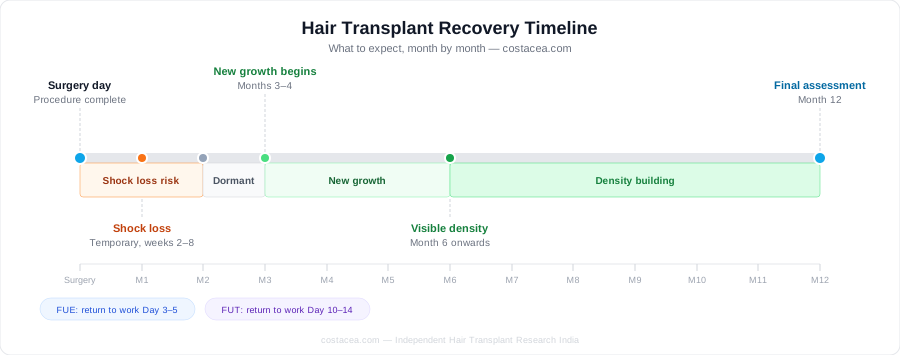
This begins after physical healing is complete and runs for ten to twelve months. The transplanted follicles enter a dormant phase before producing new hair. Visible growth begins around months three to four. Final results are assessed at twelve months.
The growth phase cannot be accelerated. It follows a biological timeline that is not significantly altered by medication, supplements, or topical treatments.
Week-by-Week Recovery Timeline
The table below maps what typically happens at each stage of recovery, alongside what you should and should not be doing. Use it as a reference point, not a strict checklist. Individual timelines vary based on procedure size, technique, and healing response.
| Timeframe | What Happens | What to Do |
| Day 1–3 | Swelling, redness, mild pain at donor and recipient sites | Rest, sleep with head elevated, follow clinic instructions exactly |
| Day 4–7 | Scabs forming at graft sites, mild itching begins | Gentle saline spray if cleared by surgeon. Do not scratch |
| Week 2 | Scabs shedding naturally, donor site healing | Most patients return to desk work. Avoid strenuous activity |
| Week 3–4 | Transplanted hair begins to shed | It’s Normal. Do not be alarmed. This is expected |
| Month 2–3 | Dormancy period. Little visible change | Continue any prescribed medications. Patience required |
| Month 4–6 | New hair growth begins from transplanted follicles | First visible results. Density will be uneven at this stage |
| Month 6–9 | Density improving progressively | Growth continues. Texture may still differ from native hair |
| Month 10–12 | Final result visible | Full assessment appropriate at the twelve-month mark |
The Shedding Phase: Why It Happens and What It Means
The most alarming moment in recovery for most patients is the shedding phase. It typically begins two to four weeks after the procedure and can last several weeks.
This is not failure. It is a predictable biological response to surgical trauma.
According to a peer-reviewed study on complications in hair transplantation, shock loss, also called recipient-site effluvium, is seen in variable degree in most patients who retain pre-existing hair within the transplant zone. It typically begins two to six weeks following surgery.
In most cases it is temporary, though the study notes it may sometimes cause a permanent reduction in native hair population, particularly in patients with pre-existing miniaturised hairs.
Transplanted follicles experience surgical trauma during extraction and implantation. In response, they enter a telogen phase, the resting stage of the hair growth cycle. The hair shaft sheds. The follicle remains alive beneath the surface. New growth emerges from the same follicle when the cycle restarts.
Shock loss can also affect native hair in and around the recipient zone. The distinction between temporary shock loss and permanent graft failure becomes clear by months four to six, when new growth from transplanted follicles typically begins.
What to watch for
Uniform shedding across the recipient zone in weeks two to six is expected. Patchy or asymmetric loss at eight months or beyond, with no new growth, warrants a review with your surgeon.
FUE Recovery vs FUT Recovery
The growth timeline is the same for both techniques. Physical recovery differs.
FUE donor site heals with small circular punctate wounds distributed across the extraction zone. These typically scab and resolve within seven to ten days. There is no suture removal. Most patients find FUE donor site discomfort manageable within the first week.
FUT donor site involves a linear incision closed with sutures or staples. Sutures are removed at ten to fourteen days. There is typically more tension and discomfort at the donor site in the first two weeks than with FUE. The linear scar continues to mature and soften over several months.
In both cases, the recipient site heals at the same rate and the growth timeline is identical. The technique affects donor site healing, not the growth outcome.
For a full comparison of both techniques, refer to the FUE vs FUT Hair Transplant guide.
What to Avoid and When
The following restrictions apply across most standard hair transplant procedures. Your surgeon may adjust specific timelines based on your procedure size and healing response. When in doubt, follow your clinic’s instructions over any general guidance.
Physical activity and exercise
Avoid strenuous exercise, heavy lifting, and anything that raises blood pressure significantly for the first two weeks. Increased blood pressure in the early post-operative period raises the risk of graft dislodgement and swelling. Light walking is generally acceptable from day three or four. Full physical activity is typically cleared at four weeks. Confirm the timeline with your surgeon.
Sun exposure
Avoid direct sun exposure to the recipient zone for at least four weeks. UV exposure to healing skin increases inflammation and can affect pigmentation of the scar tissue. A hat that does not press on the recipient area is acceptable after the first week if cleared by your surgeon.
Alcohol and smoking
Avoid alcohol for at least five to seven days post-procedure. Alcohol dilates blood vessels and can increase swelling and bleeding risk in the early recovery period. Smoking significantly impairs wound healing and graft survival. Surgeons routinely advise cessation for at least two weeks before and after the procedure. Longer cessation produces better outcomes.
Hair products and styling
Avoid any hair products, dyes, or chemical treatments on the recipient and donor zones for at least four weeks. Once cleared by your surgeon, reintroduce products gradually. Avoid applying heat directly to the scalp for at least six weeks.
Swimming and dust exposure
Avoid swimming pools, the sea, and any dusty environments for at least four weeks. Chlorine, salt water, and airborne particles pose infection and irritation risks to healing graft sites.
Medications and Post-Operative Care
Most surgeons prescribe a short course of antibiotics and anti-inflammatory medication following the procedure. These reduce the risk of infection and manage post-operative swelling. Take them as prescribed for the full duration.
Finasteride and minoxidil play a different role. They are not post-operative medications. They are long-term treatments for androgenetic alopecia. Their function is to slow or halt the progression of native hair loss. Without them, native hair around the transplant zone may continue to thin over the years following the procedure, reducing the overall density of results.
A surgeon who recommends finasteride or minoxidil alongside your transplant is not adding unnecessary cost. They are accounting for the long-term picture. Discuss the role of medical therapy in your specific case during your consultation.
Some patients use a 0.5mm dermaroller from month three onwards to support minoxidil absorption — one example here.
Scalp washing protocol varies by clinic. Most surgeons provide specific instructions for gentle washing from day three or four. Follow the clinic’s protocol exactly in the first two weeks. Do not rub, scratch, or pick at the recipient area during this period.
This section includes affiliate links.
When to Contact Your Surgeon
Most post-operative symptoms are expected and self-limiting. The following are exceptions.
Signs of infection
Increasing redness, warmth, discharge, or fever beyond the first three days should be raised with your surgeon promptly. A low level of redness in the first few days is normal. Worsening redness is not a good sign.
Excessive or prolonged swelling
Mild forehead and eye swelling in the first three to five days is common. Swelling that worsens after day five or does not begin to resolve by day seven warrants a review.
No growth at eight months
Some variability in early growth timing is normal. If there is no visible growth from any part of the recipient zone by eight months, contact your surgeon. Do not wait for the twelve-month mark in this situation.
Uneven or patchy results at twelve months
Twelve months is when results are considered final. If density is significantly uneven or coverage is substantially below what was planned at consultation, discuss revision options with your surgeon at this stage.
How Costacea Approaches Recovery Information
This guide is based on peer-reviewed clinical literature and established post-operative protocols. It is intended as general educational guidance only. It does not replace the post-operative instructions provided by your surgeon.
Recovery timelines vary between patients based on individual healing response, graft count, technique, and adherence to post-operative care. Your surgeon’s specific instructions take precedence over any general guidance.
For clinic-specific information and verified surgeon listings, see the Hair Transplant Cost in India guide or browse directly by city.
Costacea does not provide medical advice, book appointments, or recommend individual clinics.
Costacea editorial team. Last updated July 2026.
Related Guides and Tools
Hair Transplant Cost in India: Complete Guide
If you are still in the research and decision-making stage, this guide covers pricing, credential verification, and how to choose safely.
FUE vs FUT Hair Transplant: Which Is Right for You?
A comparison of both techniques covering scarring, recovery differences, graft yield, and cost. Useful context for understanding why your recovery timeline may vary by technique.
Hair Transplant Cost Calculator
Estimate your procedure cost based on hair loss pattern and city tier.
Thinking About a Hair Transplant in India?
Recovery is only part of the picture. Browse our verified cost guides to compare pricing and surgeons in your city:
- Hair Transplant Cost in Bangalore
- Hair Transplant Cost in Hyderabad
- Hair Transplant Cost in Mysore
- Hair Transplant Cost in Amritsar
Frequently Asked Questions
How long is hair transplant recovery?
Physical recovery, meaning the healing of donor and recipient sites, is typically complete within two to four weeks. Most patients return to desk work within five to seven days of FUE and ten to fourteen days of FUT. Full physical activity is usually cleared at four weeks. The hair growth timeline is separate. New growth begins around three to four months and final results are visible at ten to twelve months. Recovery and results are two different timelines.
When does transplanted hair start growing?
Transplanted follicles enter a dormant phase after the procedure. New hair growth typically begins at three to four months post-surgery. Growth is gradual and uneven in the early months. Density improves progressively through months six to nine. Final results are assessed at twelve months. Growth before three months is uncommon and growth after twelve months is unlikely to improve further without additional intervention.
Is hair shedding after a hair transplant normal?
Yes. Shedding of transplanted hair in the first two to six weeks is a normal and expected part of the process. The follicles enter a resting phase in response to the surgical trauma of transplantation. The hair shaft sheds while the follicle remains alive beneath the surface. New growth emerges from the same follicle when the growth cycle restarts. Shedding at this stage does not indicate graft failure. Absence of growth at eight months does warrant a surgeon review.
When can I return to work after a hair transplant?
Most patients return to desk-based work within five to seven days after FUE. FUT recovery typically requires seven to fourteen days before returning to office work, depending on the size of the procedure. Physical or outdoor work that involves dust, sweat, or direct sun exposure requires a longer break, typically three to four weeks. Confirm your specific timeline with your surgeon based on your occupation.
When can I exercise after a hair transplant?
Light walking is generally acceptable from day three or four. Moderate activity such as cycling or jogging is typically cleared at two to three weeks. Strenuous activity including weightlifting, contact sport, and high-intensity training should be avoided for at least four weeks. The primary concern in the early period is elevated blood pressure, which increases swelling and graft dislodgement risk. Your surgeon will provide a specific timeline based on your procedure.
When can I wash my hair normally?
Most surgeons clear gentle washing with a prescribed protocol from day three or four. Normal shampooing, including light lathering without pressure on graft sites, is typically permitted from week two onwards. Rubbing, scratching, or applying pressure to the recipient area should be avoided for the first two weeks. Hair products, conditioners, and styling agents should be avoided for at least four weeks. Follow your clinic’s specific washing protocol precisely.
Does FUE recovery differ from FUT recovery?
FUE heals with small circular punctate wounds that typically resolve within seven to ten days without suture removal. FUT involves a linear incision requiring suture removal at ten to fourteen days and typically involves more donor site discomfort in the first two weeks. The recipient site heals at the same rate for both techniques. The hair growth timeline is identical regardless of technique. For a full comparison, refer to the FUE vs FUT Hair Transplant guide.
When will I see the final results of my hair transplant?
Final results are assessed at the twelve-month mark. Growth before this point is progressive and uneven. Early growth at three to four months gives an indication of direction but not final density. By nine months, most patients have a clear picture of the result. The final months ten to twelve represent maturation of texture and density rather than new follicle activation. If results at twelve months are significantly below expectations, discuss the outcome with your surgeon before considering any revision.
What medications are needed after a hair transplant?
Most surgeons prescribe a short course of antibiotics and anti-inflammatory medication for the first five to seven days. These manage infection risk and post-operative swelling. Separately, finasteride and minoxidil may be recommended as long-term medical therapy. Their purpose is to slow the progression of native hair loss, not to support graft healing. Whether these are appropriate for your case depends on your hair loss pattern and the surgeon’s assessment. Do not self-prescribe.
What happens if hair does not grow at twelve months?
If there is no meaningful growth at twelve months, the likely causes are low graft survival, poor donor quality, or underlying scalp conditions affecting follicle viability. A review with your surgeon is the first step. The surgeon should assess the recipient zone, review the procedure records, and discuss whether a revision transplant is viable based on remaining donor availability. If you are seeking a second opinion, choose a surgeon with MD Dermatology, DNB Dermatology, or MCh Plastic Surgery. Avoid clinics that offer immediate revision without a thorough assessment.